Fireplace
Fireplace
A wood fire in your browser, simulated as it burns. Pull up a chair, put another log on, and watch it burn down to glowing embers over the evening.
Where would you like to sit?
-
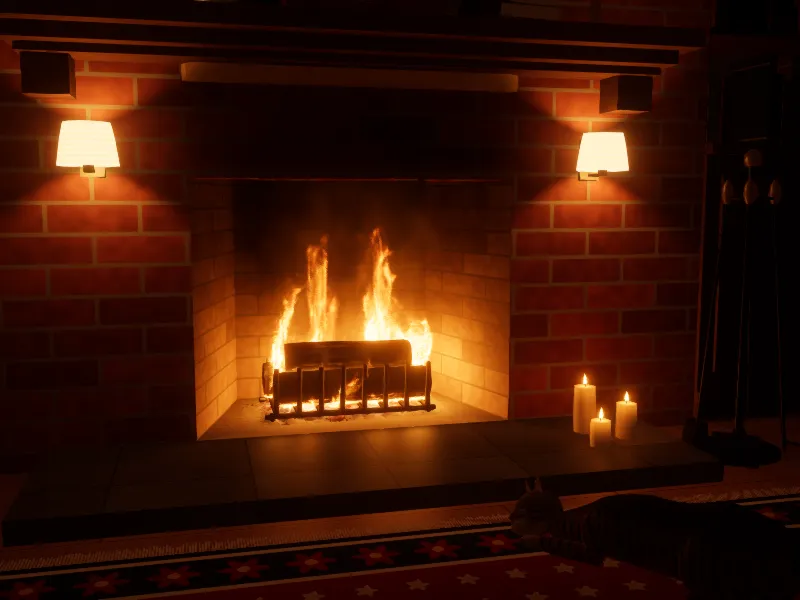 Brick hearth
A sitting room lined with books, the cat asleep on the rug
-
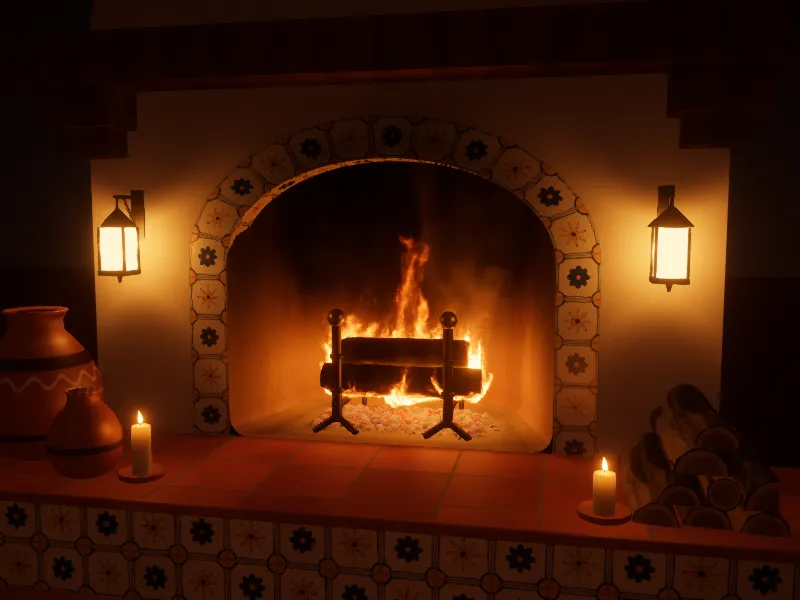 Hacienda
An adobe fireplace framed in hand-painted Talavera tiles
-
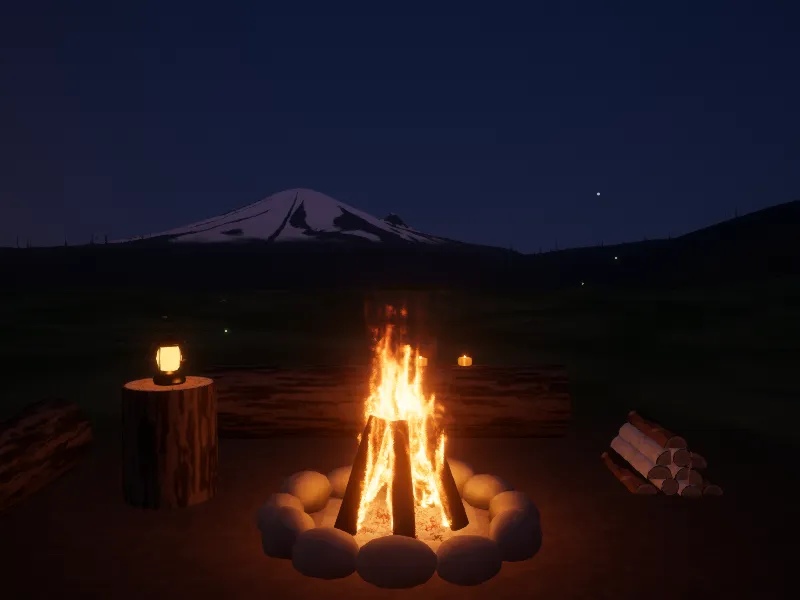 Campfire
A mountain meadow in the Cascades, Mount Rainier on the horizon
-
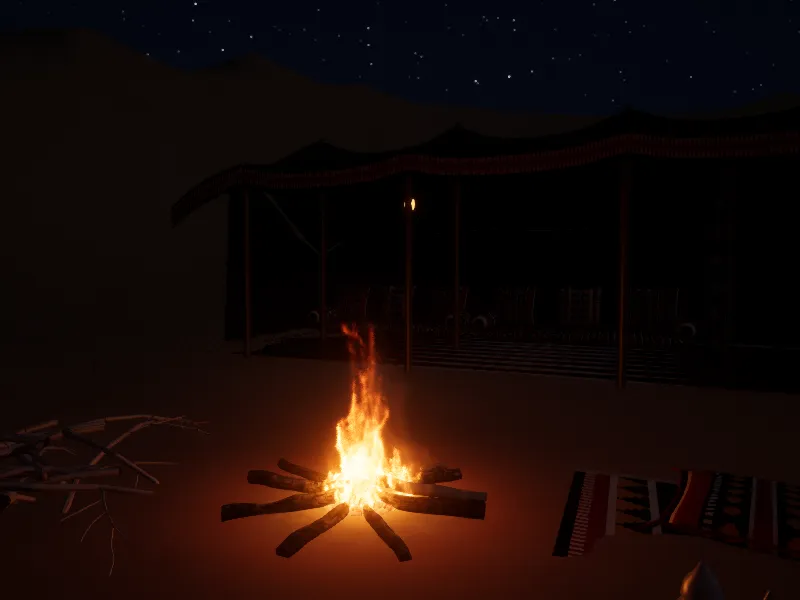 Desert camp
A Bedouin tent in the dunes of the Sahara, under the whole sky
Next time it goes straight to the fire you chose; the house button, top left, brings you back here.
What you can do
- Tongs: pick up a log and move it
- Poker: push the logs about, stir the coals
- Blow on the embers to bring them back to life
- Match: light a fire you have laid cold
Put another log on when it burns low. A fire takes its time: laid cold, it catches slowly, and left alone it burns down over the evening to a bed of embers glowing under their ash.
Look at it close up, from the armchair, or lie back under the stars; set a kettle by the fire to boil; or open the flask for the science: the heat, the air and the wood, and a fire on the Moon.
How it works
Nothing here is a video or a loop. The fire is worked out as you watch, sixty times a second, on your graphics card (with WebGPU), in real units.
- The air is a grid of up to nearly eight million cells. Hot gas rises, and the gas the wood gives off burns where it meets oxygen, glowing the colour of its hot soot.
- Each log is a block of 27,648 cells of wood, water and charcoal. Heat soaks in, dries it and breaks it down into charcoal and the gas that feeds the flames, so it chars, shrinks and burns through. The logs roll, stack and break as solid wood does.
- The sound is made as it happens: a crackle as the char splits, a pop as a pocket of gas bursts, the thud of a log landing.
- The sky outdoors is the real one, for that place, tonight: the 9,096 stars the eye can see, the Moon in its phase, the planets and the Milky Way.